What Is the Best Bedroom Temperature for Sleep?
The best bedroom temperature for sleep is 16-18C. Here is the physiology behind that range, how much it varies, and why humidity changes the answer.
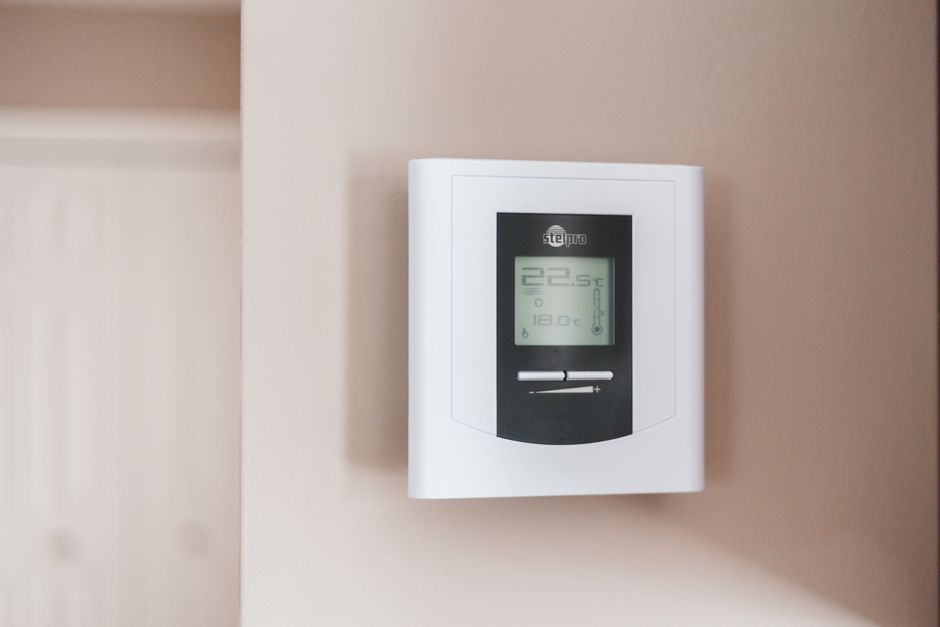
The 16-18C figure gets quoted constantly, usually with no explanation attached. It is a real recommendation with real physiology behind it, but it describes the room, not the person, and the gap between those two things is where most people's confusion lives.
Your body does not care what the thermostat says. It cares whether it can lose heat at the rate its internal clock is asking for. Room temperature is only one of the inputs, alongside humidity, bedding, what you wore to bed, and what you did in the hour before you got in it. This is why two people in the same 18C room can be comfortable and miserable respectively, and why the answer to "what temperature should my bedroom be?" has a range rather than a number.
What is the best bedroom temperature for sleep?
UK guidance settles on 16-18C. The Sleep Charity gives that range explicitly and marks the boundaries either side of it: above about 24C people tend towards restlessness, and at around 12C falling asleep becomes difficult.
Those boundaries are more useful than the midpoint. A 6C recommended band with roughly 12C of tolerance around it tells you the target is soft. If your bedroom sits at 19C or 20C and you sleep well, nothing needs fixing. The range matters when you are troubleshooting bad sleep, not as a standard to hit every night.
Note also that 16-18C is cooler than most UK homes are heated to during the day. Winter heating guidance for occupied rooms sits at 18C and above, so a bedroom at the bottom of the sleep range will feel cold when you walk into it. That is expected. You are dressing the bed for the temperature, not the room.
Why does your body need to cool down to fall asleep?
Core body temperature runs on a circadian cycle rather than holding steady. As documented in the overview of human thermoregulation, it peaks in the late afternoon and early evening and bottoms out in the small hours, typically between 11pm and 3am. The regulator is the preoptic area of the hypothalamus, which behaves like a thermostat with a set point that moves through the day.
Sleep onset is tied to the falling limb of that curve. The evening drop in core temperature is not a consequence of being asleep, it precedes sleep and helps trigger it. Your body lowers its own set point, sheds heat to get there, and sleep follows.
A room that is too warm interferes at exactly that point. If the air around you is close to skin temperature, you cannot dump heat into it efficiently, so the core temperature drop is blunted or delayed. You lie there feeling awake because, thermally, you still are. The room is not making you uncomfortable so much as preventing a signal.
How does your body actually shed the heat?
Mostly through your hands and feet. The blood vessels in the extremities dilate in the evening, moving warm blood from the core out to the skin surface where it can lose heat to the air. Hands and feet have a high surface-area-to-volume ratio and dense networks of vessels close to the surface, which makes them efficient radiators.
This explains a common and counterintuitive experience: warm feet help you fall asleep. Cold feet mean the vessels are constricted, heat stays in the core, and the core temperature drop is slowed. Socks in bed are not a contradiction of the cool-room advice, they are the mechanism by which it works. A cool room plus warm extremities is the combination that moves heat outward fastest.
It also explains why sticking one foot out from under the duvet is such a reliable self-correction. You are exposing a radiator.
Why does a warm bath before bed help you sleep?
Because it cools you down. A systematic review and meta-analysis of water-based passive body heating, published in Sleep Medicine Reviews in 2019, pooled the trial evidence and found that a warm bath or shower before bed shortened the time taken to fall asleep by around 10 minutes on average.
The mechanism is the one described above, run deliberately. As the University of Texas at Austin summary of that research puts it, warm water stimulates the thermoregulatory system and drives a marked increase in blood flow from the core out to the hands and feet, which removes body heat efficiently and produces a decline in core temperature. The bath warms your skin so that your core can cool faster.
Timing is what makes it work. The review points to roughly 90 minutes before bed, within a one-to-two-hour window, with water between 40C and 43C. Get in immediately before bed and the core temperature drop has not happened yet, so the effect works against you.
How much does the ideal temperature vary between people?
Enough that the range is a starting point rather than a prescription. Several factors shift where in the band a given person sits, and some push outside it entirely.
Body composition matters, because more insulating tissue means slower heat loss at a given air temperature. So does metabolic rate, which is why the same room can suit one partner and not the other. Age shifts thermoregulation too, with older adults generally less able to lose heat quickly and often preferring a warmer room than the guidance suggests. Menopausal night sweats and some medications override the range altogether.
Bedding is the confounder people forget. The room temperature you need depends entirely on what is on top of you, which is why a duvet appropriate for January makes an 18C room unbearable in July. Matching duvet tog to season is usually a bigger lever than adjusting the thermostat, and our guide to duvet togs covers where the thresholds sit.
Treat 16-18C as the setting to try first if your sleep is poor and you have no better information. If you sleep well at 20C, your body has already answered the question.
Why does humidity change the answer?
Because a meaningful share of your heat loss happens through evaporation, and evaporation depends on how much water the surrounding air can still absorb.
In dry air, sweat evaporates readily and takes heat with it as it goes. In humid air, the same sweat sits on your skin doing nothing. You are producing it, so your body thinks it is cooling, but the heat is not actually leaving. This is why 20C in a humid room can feel worse than 22C in a dry one, and why a muggy night after rain feels harder to sleep through than a hotter but drier one.
The practical consequence for a UK bedroom is that ventilation often beats cooling. Moving air across the skin restores evaporative heat loss even when the air is not especially cold, and exchanging humid indoor air for drier outdoor air lowers the felt temperature without touching the thermostat. Bathrooms, drying laundry indoors and unventilated double glazing all push bedroom humidity up, and all three are easier to fix than the temperature itself.
What happens when the room is too warm or too cold?
The two failures are not symmetrical. A room that is too warm mainly disrupts the second half of the night. You fall asleep, your body continues trying to shed heat it cannot shed, and you surface repeatedly in the early hours. Heat tends to fragment sleep rather than prevent it, and it particularly intrudes on the deeper stages.
A room that is too cold behaves differently: it mostly stops you falling asleep in the first place. Peripheral vasoconstriction kicks in to preserve core heat, which is precisely the opposite of the vasodilation that sleep onset depends on. That is the state behind lying awake with cold feet, and it is why the fix is warming the extremities rather than heating the whole room.
Once you are asleep under adequate bedding, a cold room is largely harmless and often preferable. This asymmetry is why the guidance leans cool: the cold failure mode is easy to correct with a duvet and a pair of socks, while the hot one is not correctable from inside the bed.
How do you hit the right temperature in a UK bedroom?
Most UK bedrooms overheat in summer and are already close to the range in winter, so the practical work is nearly all on the summer side. The levers, in rough order of effect:
Keep the heat out during the day
Closing curtains or blinds on sun-facing windows before the room warms up is more effective than trying to cool it down afterwards. Thermal mass means an overheated bedroom stays overheated well past midnight.
Create airflow rather than chasing air temperature
A fan does not lower room temperature, but moving air restores evaporative cooling at the skin, which is what you actually feel. Cross-ventilation between two open windows moves far more air than one.
Change the duvet before you change the thermostat
Seasonal tog is the single largest variable in how warm the bed is, and it costs nothing to run.
Manage humidity
Ventilate after showers, avoid drying laundry in the bedroom, and open windows when outdoor air is drier than indoor air, usually late evening rather than mid-afternoon.
Turn the bedroom radiator down in winter
Heating the room you sleep in to daytime living-room temperature is a common and easily corrected mistake. A thermostatic valve set low keeps it above the cold threshold without pushing it past the range.
Our step-by-step guide to making a bedroom cooler for sleep works through each of these in detail, including which of them are worth spending money on.
One caveat worth stating: temperature is one of three environmental variables, and it is rarely the only thing wrong. The same Sleep Charity guidance that gives the 16-18C range puts equal weight on darkness and quiet, noting that light is detectable through closed eyelids and that noise disrupts sleep architecture even when it does not fully wake you. A perfectly cooled bedroom with a streetlight through the curtains is still a bedroom with a problem.
Frequently asked questions
What is the ideal bedroom temperature for sleep in the UK?
Is it better to sleep in a cold room or a warm room?
Why can't I sleep when my feet are cold?
How long before bed should I have a bath?
Does humidity affect sleep temperature?
Should the bedroom be a different temperature for babies?
How to Make a Bedroom Cooler for Sleep
What Tog Duvet Do You Need?
How to Blackout a Bedroom Without Drilling